
Corporate Video Production in Orlando FAQs
August 20, 2026 · 10 min read
Practical guidance on corporate video production in Orlando, from planning and budgets to studio use, timelines, and lead-focused decisions.
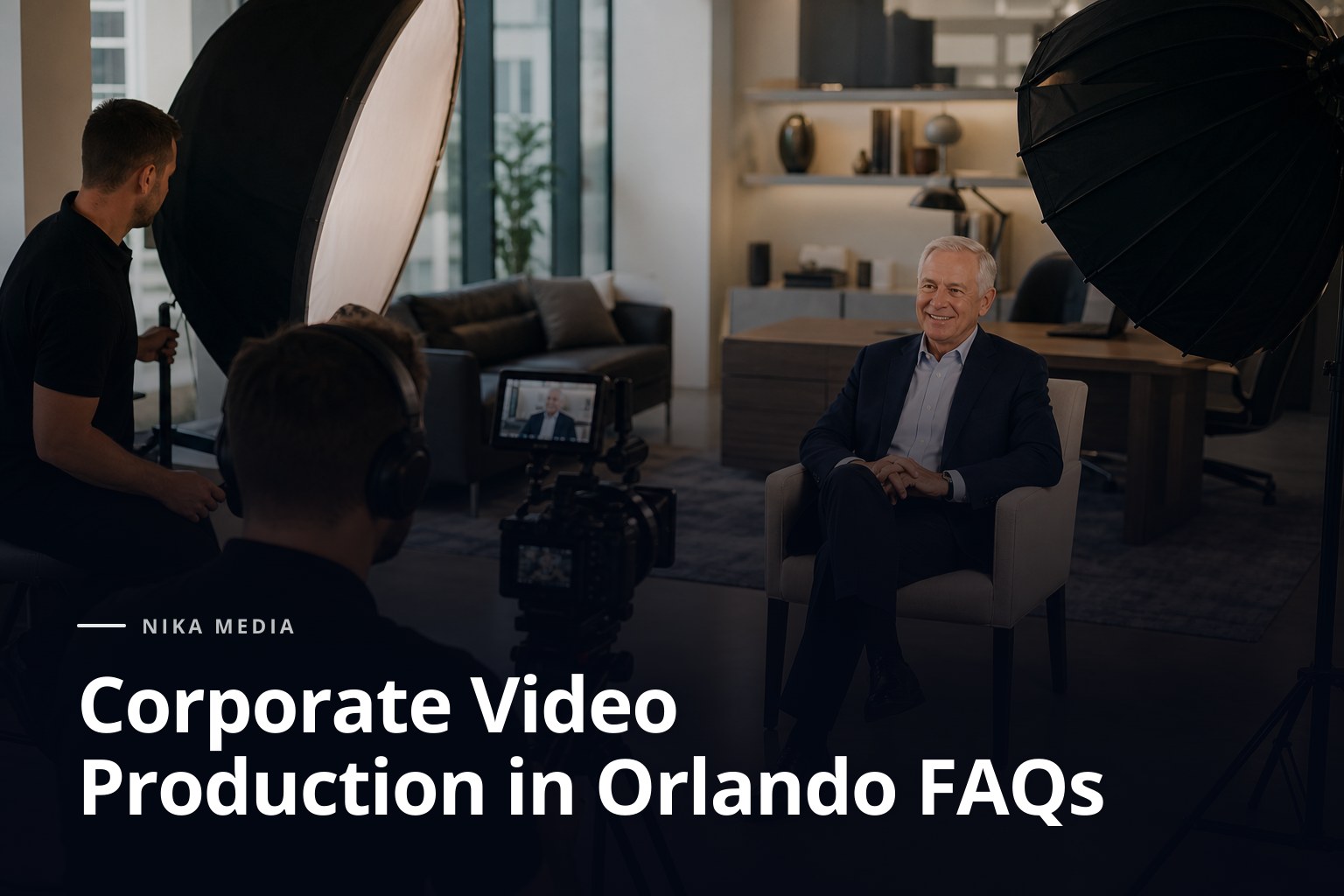
If your team has already said “we need video,” the real question usually arrives two meetings later: what should be filmed first, who needs to approve it, and how do you keep it from becoming another expensive asset nobody uses? That is where corporate video production in Orlando stops being a creative exercise and starts becoming a business decision.
The pressure is familiar. Marketing wants something polished. Sales wants something that supports leads. Operations wants as little disruption as possible. And leadership wants a result that can live beyond one campaign. Good planning makes those goals compatible. Poor planning turns even a strong shoot into a file that sits in a folder.
- Start with the business goal, not the camera setup.
- Decide where the video will live before you decide how cinematic it should be.
- Keep the approval chain short or production slows fast.
- Use the format that matches the audience’s attention span, not the internal preference.
- Build each video so it can be reused across landing pages, ads, email, and social content.
What Corporate Video Production in Orlando Should Solve First
Most companies begin by asking for a “brand video,” but that phrase hides too much. A hiring video, a product explainer, a sales enablement piece, and an executive message all demand different writing, pacing, and visuals. If the video has no job, the shoot becomes a collection of nice shots with unclear value.
The better first question is simple: what should change after someone watches it? Should a prospect book a call, trust the company more, understand a service faster, or move through a long buying cycle with fewer questions? When that outcome is clear, creative decisions become easier. A shorter script may outperform a glossy two-minute piece if the audience is busy and the message is specific.
For teams comparing providers, it helps to think in terms of strategy before production. If you are also evaluating positioning, script structure, and distribution, Choosing a video marketing agency in Orlando is worth reviewing because the right partner should ask about business goals before talking about transitions, lenses, or motion graphics.
What the Planning Process Usually Looks Like
A strong video starts long before the shoot day. The early work usually includes a short discovery conversation, message prioritization, script or outline development, location planning, talent scheduling, and a shot list that matches the final use case. Skipping those steps does not save time; it just shifts the work into production day, where mistakes are more expensive.
One practical sign of a healthy process is how quickly a team can answer basic questions. Who approves the script? Who will appear on camera? Which version of the message is for prospects and which is for existing clients? If those answers are vague, the project will drift. That drift often shows up as extra revision rounds, mismatched visuals, or a final cut that feels generic.
Businesses in Orlando also have a useful advantage: you can often choose between filming on location, in a controlled studio, or in a hybrid setup. That choice matters more than many first-time clients expect. A studio can keep lighting, sound, and branding consistent. A location shoot can add context and credibility. The right answer depends on whether the video needs polish, realism, speed, or flexibility.
If you are producing content for sales follow-up, onboarding, or rapid lead response, think beyond the shoot itself. The surrounding workflow may be just as important as the footage. For example, AI sales call automation for better lead response can be a useful companion topic when your video is meant to support lead handling rather than simply build awareness.
Choosing the Right Format for the Business Goal
Not every company needs the same style of video, and not every style belongs on the same page. A homepage video should usually be concise and easy to understand without sound. A service explainer can be more structured and detailed. A founder interview can work well when trust and personality matter. A recruitment piece needs a different emotional tone than a direct-response ad.
A useful way to narrow the format is to ask what would make a viewer stop, stay, and take the next step. If the audience already knows the category, the video should reduce friction quickly. If the audience is unfamiliar, the video may need a clearer narrative and more context. If the audience is warm but undecided, proof, clarity, and relevance matter more than visual spectacle.
Short-form clips and cutdowns deserve more attention than many teams give them. One good shoot can often produce a primary video and several smaller assets for ads, landing pages, reels, email embeds, and sales follow-up. That is where corporate video production in Orlando becomes more efficient: one production day can support multiple stages of the funnel if it is planned that way.
For some businesses, especially those active in hospitality, lifestyle, real estate, or visual branding, external reference points can also help define the level of polish they want. A site like Saint-Tropez Confidential can be useful as a mood reference if you are trying to articulate a premium feel, though inspiration should always be adapted to your own audience and market.
Where AI Fits Without Diluting the Message
AI tools can improve response speed and consistency, but they should not replace the decision about what the message needs to be. If your video is meant to drive inquiries, AI can help route leads, answer common questions, or support follow-up after someone watches. If the video is meant to build trust, automation should stay in the background and not interrupt the experience.
This is why many teams benefit from separating the content strategy from the response system. A strong video creates interest. The follow-up system converts that interest into a conversation. When both are aligned, the asset is more useful. When they are disconnected, even a well-produced piece can underperform because no one responds fast enough.
For teams exploring conversational follow-up and WhatsApp-based interactions, AI Virtual Assistant for WhatsApp: Practical FAQs can help frame the operational side of the journey.

Budgets, Timelines, and the Decisions That Change Both
Most budget surprises come from scope creep, not from the shooting itself. More versions, more revisions, more locations, more talent, and more rounds of internal approval all add friction. A video planned around one message and one audience is usually easier to control than a video trying to satisfy every stakeholder at once.
Timeline pressure works the same way. If a company needs a campaign live by a certain date, the script, approvals, and media plan need to move first. Waiting to decide distribution until after the edit is finished often leads to rework. That is especially true if the video will support ads, where framing and hooks may need to be built into the structure from the start.
A good production partner should be able to tell you what is likely to move the schedule. The common delay points are usually the same: unclear messaging, slow feedback, too many revision comments from too many people, and last-minute changes to the shoot list. If those risks are identified early, they are manageable. If they are ignored, they become expensive.
For teams that care about trust, accessibility, and best practices online, a few external standards can also guide decisions. Google Search Central documentation can help when video is part of a page strategy, and the W3C accessibility standards homepage is useful if captions, contrast, or on-page media treatment matter to your audience.
How to Judge Quality Before the Edit Is Finished
A lot of buyers wait until the final cut to decide whether the project is working, but the warning signs usually appear earlier. The script may sound like internal language rather than customer language. The shot list may focus on aesthetics while ignoring the questions buyers actually ask. The interview prompts may produce safe answers instead of useful ones.
During production, pay attention to clarity, not just visual style. If the footage looks good but the message feels vague, the issue is not post-production. It is usually the framing of the story. The best corporate video production in Orlando projects often look straightforward because they are built around a message people can repeat after one viewing.
There is also a practical test many teams overlook: ask whether the video would still make sense with the sound low. If not, it may need stronger on-screen text, cleaner sequencing, or more visual cues. That matters because a large share of viewers will encounter the content in a muted environment, especially on social feeds and mobile.
A second test is more operational: can sales, customer service, or the founder use this asset without extra explanation? If the answer is no, the video may still be attractive, but it is not yet useful. Useful video tends to have a simpler structure than stakeholders expect and a sharper point than the first draft usually delivers.
Questions Buyers Should Ask Before Hiring
The easiest way to avoid disappointment is to ask questions that reveal how a provider thinks, not just what they own. Equipment matters, but process matters more when the project touches strategy, messaging, and lead generation. If you are comparing vendors, ask how they handle script development, revision rounds, distribution planning, and asset reuse.
A few questions are especially revealing:
- How do you decide which format fits the goal?
- What happens if the message changes after pre-production?
- How do you plan for cutdowns or multiple versions?
- Who should be involved in approvals, and who should not?
- How do you support the video after delivery?
Those questions help separate a production-only relationship from a more strategic one. That distinction matters because many teams do not actually need more content; they need content that travels further through the customer journey. If a provider only talks about filming, they may miss that larger job.
This is also where a studio can be a practical advantage. A professional studio in Orlando can simplify lighting control, sound, branding, and repeatable content creation. If your team plans recurring interviews, product demos, training pieces, or regular social content, the value often comes from consistency and reduced setup time, not just from the backdrop itself.
FAQ
How long does a corporate video project usually take?
It depends on the scope, the number of stakeholders, and how quickly the script and approvals move. A simple project can progress quickly when decisions are made early. A more involved one may need more time for planning, filming, edits, and revisions.
Do we need a full script before filming starts?
Not always, but you do need a clear message structure. Some videos work better with a script, while others benefit from a tight outline and guided interviews. The important part is making sure the final message is defined before the camera starts rolling.
Is a studio better than filming at our office?
It depends on the message and the look you want. A studio is useful when control, consistency, and speed matter. Your office can be better when the space itself supports credibility or context. Many teams use both depending on the asset.
How many revisions should we expect?
That varies by project, but the best approach is to agree on the process before editing begins. Too many revision voices can slow everything down. Clear decision-making usually matters more than the raw number of notes.
Can one video be turned into multiple assets?
Yes, if the project is planned for that from the beginning. A single shoot can often support longer and shorter edits, social cutdowns, landing-page versions, and sales follow-up clips. That is one of the most efficient ways to approach corporate video production in Orlando.
How do we make sure the video helps generate leads?
The video should answer a real buyer question and point to a specific next step. The page, ad, or follow-up system around it matters too. If the content and the response flow are aligned, the asset is more likely to drive action.
If your team is ready to turn video into something that supports sales, lead response, and repeatable content instead of another one-off deliverable, NIKA MEDIA can help you plan the format, produce the assets, and connect them to a smarter follow-up system.
If you want to discuss corporate video production in Orlando for a campaign, a service page, a studio shoot, or a sales-focused content plan, start with the business outcome you need and work backward from there. A clear brief saves time, protects the message, and gives the final video a job it can actually do.
- corporate video production in Orlando
- Orlando corporate video production
- corporate video services in Orlando
- business video production Orlando
- video production studio in Orlando
- video marketing agency Orlando
- sales-focused video content
- brand videos for businesses
- AI lead response
- WhatsApp sales assistant