
Trusted recording studio rental in Orlando
August 8, 2026 · 12 min read
Find the right recording studio rental in Orlando. Learn what a professional studio includes, what to check, and how to avoid costly booking mistakes.
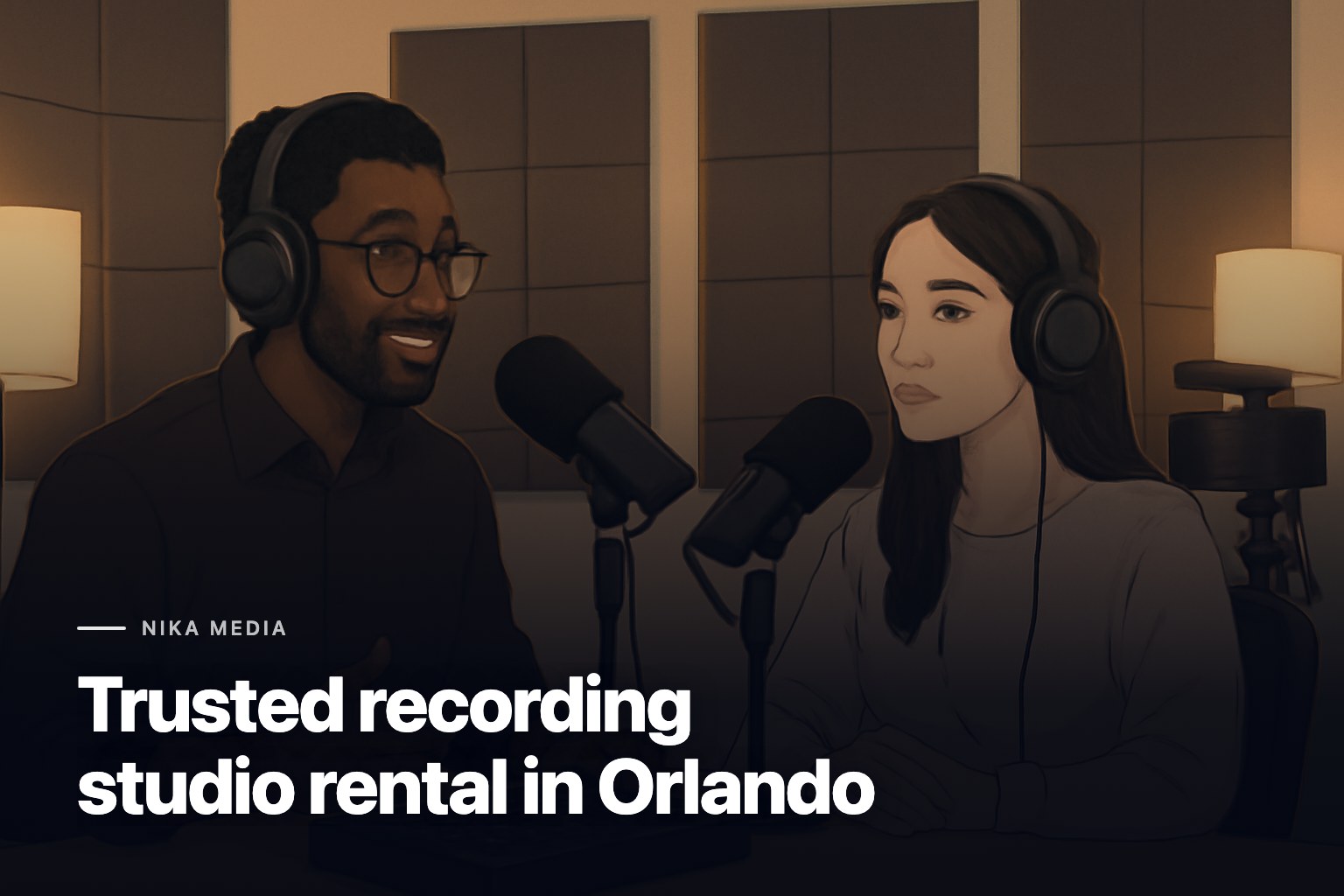
What a recording studio rental in Orlando should cover
A professional recording studio rental in Orlando should cover more than basic access to equipment. At minimum, it should give you a controlled recording environment, reliable signal chain, and a workflow that lets you spend time on performance or delivery rather than troubleshooting. If the studio cannot explain what is included before you arrive, that is already a warning sign.
The clearest sign of quality is not the size of the gear list. It is whether the space is designed around predictable outcomes. That usually means acoustic treatment that controls reflections, a monitoring setup that lets you hear problems before they are baked into the recording, and a session process that makes edits, backups, and handoff straightforward.
Professional studios also tend to have boundaries. They know what they do well and what they do not. If a studio tries to promise everything — podcasts, voiceover, music, livestreams, green screen work, multitrack tracking, and same-day social clips — without being able to show you how the space supports each use case, be careful.
Room treatment and isolation
Acoustics are easy to underestimate because they are less visible than cameras or microphones. Yet they often decide whether a recording sounds polished or simply loud. The room should control echo, outside noise, and room coloration enough that the voice or instrument remains clear and usable without heavy correction. For professional audio context, consult the Audio Engineering Society.
This matters even more for spoken content. A podcast episode or sales video can be technically “recorded” in almost any room, but if the room adds harsh reflections, the final edit starts carrying a repair burden. That extra cleanup can make a short turnaround harder than expected.
Microphones, interfaces, and monitoring
A studio does not need a museum of gear to be effective. It does need dependable microphones for the intended application, a clean audio interface, and monitoring that helps you hear what the audience will hear. A good engineer can work around limited gear; a bad setup makes everyone work harder.
Ask whether the studio maintains its equipment regularly and whether it matches the content type. A voiceover booth, a podcast interview, and a live performance have different needs. A professional recording studio rental in Orlando should be able to explain those differences without drifting into sales talk.
Session support and file handling
The part many people forget is what happens after the red light turns off. Who names the files? Who stores the backups? What happens if you need a clean export for your editor or ad team? These details are not glamorous, but they decide whether the content moves smoothly into post-production.
If the studio is being used for brand content, ask how the files will be delivered and in what format. The cleanest sessions are the ones where the handoff is planned before the first take.
The details that separate a usable room from a real production environment
A studio can look professional and still slow your project down. That usually happens when the space was built around appearance rather than workflow. The difference shows up in the little decisions: whether the talent can see the script comfortably, whether the producer has space to work, whether lighting changes take thirty seconds or ten minutes.
If you are comparing options for a recording studio rental in Orlando, think beyond the console and look at the session flow. Can the room support a solo voice session, a two-person interview, or a content shoot without constant rearranging? Can the engineer adapt quickly if the client decides to record a second version for social media? A studio earns its value when the setup does not become the story.
A lot of people also miss the difference between “available equipment” and “included equipment.” One studio may have camera support, teleprompter options, or lighting on site but charge separately for each. Another may bundle only the bare essentials and leave you assembling the rest from scratch. Neither is automatically wrong, but the pricing and deliverables need to be crystal clear before you book.
Video and social content compatibility
Many clients are not renting studios just to make audio files. They need clips, reels, interviews, testimonials, or founder videos that will be cut into ads and organic content. If the studio cannot support framing, background control, and basic production continuity, you may end up with an audio file that is usable but a visual asset that feels generic.
This is one reason some teams prefer working with a studio and production partner that thinks in campaigns rather than isolated recordings. NIKA MEDIA, for example, works with businesses that need the session to feed a broader content and lead-generation system, not just a single file delivered at the end.
Brand consistency and performance pressure
The studio should also make it easier for people to perform naturally on camera or mic. Bad seating, poor lighting, or a noisy control room can make even experienced speakers sound stiff. When the environment feels calm and organized, the talent can focus on delivery instead of the mechanics of the room.
That matters for founders and service brands especially. If your content is meant to build trust, the session needs to support a tone that feels credible and composed, not rushed. The studio is part of that signal.
How to judge whether the rental fits your actual project
The best way to evaluate a recording studio rental in Orlando is to start from the final deliverable and work backward. A podcast interview, a voice ad, a sales video, and a live-streamed announcement all require different levels of support. The wrong studio can still produce sound, but it may not produce the version you need without extra editing, extra takes, or extra cost.
Before you book, ask a few plain questions. What exactly is included in the rental? Is an engineer present the whole time? Are editing, cleanup, and export part of the package or separate? Can the studio handle both audio and video if the project needs both? The answers should be specific, not vague.
A practical way to think about it: if the studio expects you to arrive already organized, already scripted, and already technically fluent, then the rental is only a room. If it also helps you shape the session, capture the material cleanly, and move it into the next stage without friction, then you are getting a production environment.
Signs the studio probably fits
- They can explain the session flow without improvising as they talk.
- The included gear matches the type of content you are making.
- They are clear about turnaround, file delivery, and any add-ons.
- The room looks like it was designed for recording, not just decorated for photos.
- They ask about your goals instead of jumping straight to availability.
Signs to slow down before booking
- The studio avoids specifics about what is included.
- Equipment is described in broad terms with no mention of condition or setup.
- The team says “we can do anything” but cannot describe a process.
- You are expected to figure out the format, order, and deliverables on site.
- The quote changes once you ask about editing, producer time, or file handoff.
If you are not sure what your project needs, it helps to compare the rental to the content itself. A simple internal interview and a full brand shoot should not be treated the same way. If you need a deeper framework for that decision, this guide to choosing a recording studio rental in Orlando is a useful companion piece.

Common mistakes that cost time and money
The most expensive studio mistake is not choosing the wrong microphone. It is booking a space without matching it to the work. A polished room can still cost you if the session is built around assumptions rather than requirements. That usually shows up as reshoots, extra edits, or content that never gets used.
One common error is treating a recording session like a casual meeting. People arrive with no script, no shot list, and no agreement on who is approving what. The studio then becomes a decision-making room instead of a production room, and the session drags.
Another mistake is overestimating what the rental includes. If you need an editor to clean audio, a producer to keep the session moving, or someone to coordinate camera and lighting, do not assume those services are bundled. Ask before you book. It is much cheaper to clarify the scope than to discover a gap after the first hour.
There is also the issue of buying the wrong amount of time. Many sessions run long because the team underestimates how many takes are needed or how long setup takes for multiple formats. If you are recording both audio and video, build in room for resets, not just the final takes.
Some teams now pair studio sessions with workflow automation so leads, follow-ups, and content handoff do not stall after the shoot. If your project sits inside a bigger funnel, these notes on AI sales call automation and this guide to AI virtual assistants for WhatsApp show how production and follow-up can work together instead of living in separate silos.
Questions to ask before you sign
- What is included in the rental, and what is billed separately?
- Is an engineer, producer, or assistant part of the session?
- How are files delivered, labeled, and backed up?
- Can the studio support video as well as audio if needed?
- What happens if the project runs longer than planned?
If the answers feel indirect, keep looking. A solid recording studio rental in Orlando should reduce uncertainty, not create new layers of it.
Why the right studio matters for lead generation and content that converts
A lot of businesses still think of studio time as a creative expense. That misses the bigger point. For a brand that relies on content to attract leads, build trust, and close sales, the studio is part of the pipeline. The final asset might be a podcast clip, a testimonial, a founder video, or a short ad, but the quality of the session affects whether the content feels trustworthy enough to perform.
This is where a professional setup earns back its keep. Better acoustics, better pacing, and better file handling shorten the path from recording to publishing. If your team is trying to stay visible without losing consistency, the studio should fit the pace of your marketing, not just the preferences of the person behind the camera.
NIKA MEDIA approaches studio work with that reality in mind. The goal is not to make sessions look busy. The goal is to help businesses create content that is clean, usable, and connected to actual business outcomes. That includes production support, smart workflows, and the kind of session planning that keeps the recording from becoming the bottleneck.
There is also a strategic advantage in consistency. Once your studio process is predictable, you can batch content, reduce friction for speakers, and make follow-up faster. In a market where attention moves quickly, the operational side of recording can matter as much as the creative side.
Choosing the setup that will still make sense after the session
A good rental should feel useful the next day, not just comfortable during the shoot. If you walk out with clean files, a clear edit path, and material your team can actually publish, the studio has done its job. If you walk out with a promising recording and a pile of unresolved tasks, the space was only half the solution.
That is why the best recording studio rental in Orlando is usually the one that matches your format, your timeline, and your downstream process. The room, the gear, and the support should all serve the same result: less friction, better content, and a cleaner path to distribution.
If you are weighing a session for a brand video, podcast, voiceover, or conversion-focused content, NIKA MEDIA can help you choose the right setup and build the production around it. Reach out if you want a studio experience that is structured for both quality and follow-through, not just for the booking calendar.
FAQs
What is usually included in a professional recording studio rental?
A professional rental often includes the room, basic gear, monitoring, and some level of technical support. The exact scope varies, so ask what is included versus billed separately before you book.
Do I need an engineer for a studio session?
If you are not comfortable managing setup, levels, file handling, and troubleshooting, an engineer is worth having. For business content, that support can save time and reduce mistakes.
How do I know if a studio is good for both audio and video?
Ask whether the room supports lighting, camera placement, framing, and clean background control in addition to sound. A studio can sound great and still be awkward for video.
What should I bring to a recording session?
Bring your script, talking points, brand references, approved deliverables, and any assets the studio asked for in advance. If you are recording for marketing, bring clarity on the final use, not just the topic.
Why does studio quality matter if I can edit later?
Editing helps, but it cannot fully fix poor acoustics, bad monitoring, or a disorganized session. A cleaner recording saves time in post and usually sounds more professional.
How far in advance should I book a studio?
Book as soon as you know the content format and the number of people involved. That gives you time to confirm scope, prepare materials, and avoid last-minute compromises.
- recording studio rental in Orlando
- professional recording studio
- Orlando studio rental
- podcast recording studio
- video production studio
- audio recording services