
AI sales call automation for better lead response
August 8, 2026 · 12 min read
AI sales call automation helps teams answer faster, qualify leads, route calls, and protect follow-up quality without making customer conversations robotic.
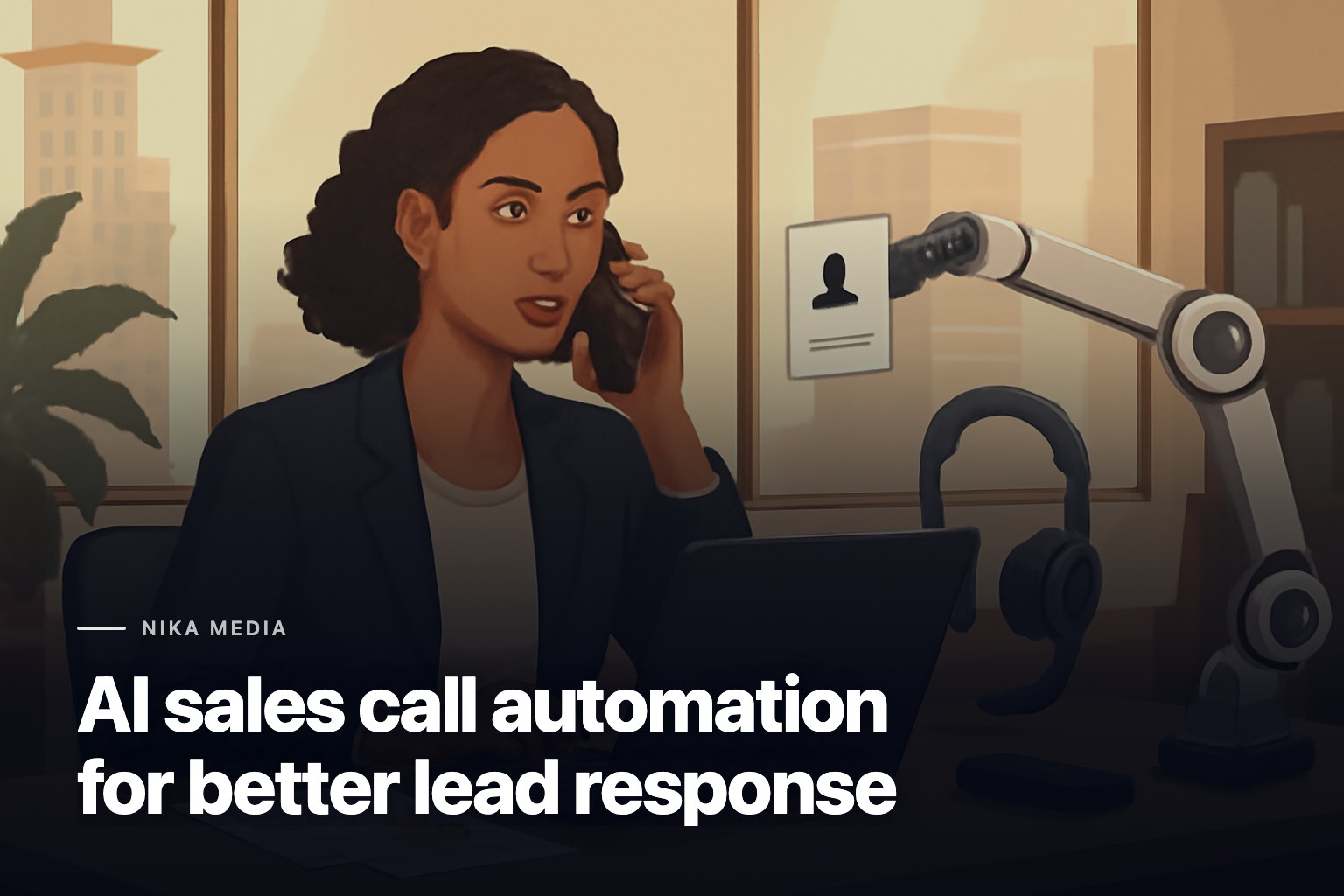
Where AI sales call automation fits in a real sales workflow
The strongest use case for AI sales call automation is not replacing a seasoned closer. It is handling the repetitive front end of the call flow that slows people down: greeting, qualification, routing, appointment setting, basic FAQs, and follow-up triggers. If your team spends too much time asking the same questions before every appointment, automation can remove friction without removing judgment.
That matters most for service businesses, local businesses, agencies, clinics, and personal brands that rely on fast response times. Someone calls because they are ready now, not because they want to wait for a callback chain. A good voice system can answer instantly, collect the right details, and move the lead toward the next step while the opportunity is still warm.
If your process depends on scripts, CRM updates, or reminders that often get delayed, AI Virtual Assistant for WhatsApp: A Complete Guide to Making the Right Decision is worth comparing alongside call automation. Many businesses end up using both channels because WhatsApp handles ongoing conversation while voice handles higher-intent moments. The decision is less about a channel preference and more about which touchpoint closes the gap fastest.
There is also a practical distinction between a live receptionist, a virtual assistant, and automated sales calling. A receptionist answers. A sales assistant qualifies. An automated voice system can do both, but only if you define when it should stay in control and when it should hand off. If those rules are fuzzy, the technology starts sounding confident while making bad decisions.
Signals that your business is ready for automation
Not every business needs this today. Some teams still need cleaner offers, better response discipline, or tighter lead sources before automation will pay off. But there are clear signs that the manual approach is already costing you.
Your calls cluster around the same few questions
If most inbound calls repeat the same eight or ten questions, you are already dealing with a process problem, not just a staffing problem. Prospects want hours, pricing range, location, booking availability, service fit, or a next-step explanation. Those are all manageable with a well-designed conversational flow.
Your team misses calls outside business hours
A lot of buying decisions happen when your staff is unavailable. If you only respond during office hours, you are leaving a gap that your competitors can use. AI sales call automation is especially useful when the first contact needs to happen before the lead cools off.
Your leads need qualification before a human spends time on them
If your sales team is spending real time on unfit leads, automation can filter based on simple criteria: budget range, service type, timeline, region, or urgency. The point is not to interrogate people. The point is to avoid asking a senior team member to have the same unproductive conversation twenty times a week.
Your follow-up process is inconsistent
A call that ends without a record, next step, or reminder is a leak. Automated systems can log details, trigger texts or emails, and notify the right person when a lead should be escalated. If your sales process already lives across spreadsheets, inboxes, and memory, automation gives you a cleaner handoff path.
What separates a useful system from an expensive mistake
This is where many buyers get distracted by features they will not actually use. A polished dashboard does not matter if the voice quality sounds off, the conversation derails on basic questions, or the system cannot route the call properly. The right choice usually becomes clear when you test for operational fit instead of demo polish.
One of the first things to examine is how the system speaks under pressure. Can it recover when a caller interrupts? Does it handle accents, background noise, and short answers without freezing? Can it keep track of context when someone changes the subject mid-sentence? These details matter because real callers do not behave like scripted demo users.
You should also check whether the platform can support your sales rules, not just generic conversation. If your business needs to collect a specific intake form, screen for service eligibility, or route high-intent prospects to a human immediately, the automation needs to obey that logic. A system that “mostly” follows your process creates more cleanup than it saves.
For businesses that also need a physical production environment for brand content, Recording Studio Rental in Orlando: What a Professional Studio Really Includes can be a useful reference when building the broader sales and content engine. A polished voice system works better when the rest of the brand experience is equally coherent.
Questions to ask before you buy
- Can the system handle interruptions, silence, and awkward phrasing without losing the conversation?
- Does it support human takeover when the caller needs judgment, nuance, or reassurance?
- Can it log outcomes into the tools your team already uses?
- Are you able to control scripts, prompts, routing, and escalation rules without relying on constant vendor edits?
- Does it match the tone your brand actually uses on sales calls?
If the answer to any of these is vague, keep digging. A lot of sales automation problems start as “we assumed it would do that.”
Design the conversation before you automate it
The biggest mistake is trying to automate a bad call flow. If your team does not know what should happen on the first call, the software will simply scale the confusion. The most useful starting point is a plain-language map of the conversation: what the caller wants, what information you need, and where the conversation should go next.
Think in terms of decision points. Does the caller need an appointment, a quote, a callback, or a transfer? What happens if they are not a fit? Which questions are mandatory, and which are optional? When you define those rules clearly, AI sales call automation becomes a practical tool instead of a vague promise.
It also helps to distinguish between intake and selling. Some calls are meant to book, not persuade. Some are meant to qualify, not close. If you force one script to do everything, the experience gets clumsy. A better design uses shorter branches that are easy to maintain.
A clean workflow often includes three layers:
1. Greeting and intent detection.
2. Qualification and routing.
3. Booking, transfer, or follow-up.
That structure sounds simple because it should be. Most failures come from overengineering the middle.
If you want a fuller decision framework, How to Choose AI Sales Call Automation: Key Factors, Mistakes, and Recommendations goes deeper into the buying side. This article focuses more on what the system needs to do once it is live, which is where many teams discover the real limitations.

Data, compliance, and trust are part of the sales experience
A phone call is not just a sales moment. It is also a data exchange. The caller may share contact details, intent, service needs, or scheduling information. If your system captures that information badly, the sales value drops and the trust risk rises.
Compliance deserves a real review, especially if the automation makes outbound calls or records conversations. Your business should understand local calling rules, consent requirements, recording notices, and opt-out handling. The Federal Communications Commission is a good starting point for U.S. calling guidance, while the Federal Trade Commission is useful for understanding consumer protection and deceptive practices. If your calls are part of a broader contact strategy, those rules are not optional background noise.
Trust also affects conversion. When a prospect realizes they are speaking to a system, they quickly decide whether it feels helpful or manipulative. The best setups are transparent enough to feel honest and competent, but not so awkward that they break the flow of the conversation. Clear disclosure, accurate responses, and a simple handoff path do more for trust than any sales script trick.
A good rule: if the call touches sensitive information, legal nuance, or a high-stakes purchase, make human escalation easy and immediate. AI sales call automation should reduce bottlenecks, not create liability.
How to measure whether the system is working
Do not measure success only by whether the tool is “busy.” A busy system can still be failing if it is sending the wrong leads to sales, missing bookings, or creating extra manual cleanup. The best measurement combines volume, quality, and handoff accuracy.
Start with the basics:
- Were calls answered that would otherwise have gone to voicemail?
- Did the system correctly identify lead intent?
- Did qualified leads reach the right next step?
- Did any conversations break down because the system could not understand the caller?
- Did your team spend less time repeating the same qualification questions?
The answers to those questions matter more than vanity metrics. If the automation creates more booked calls but fewer qualified ones, you may have solved speed while weakening sales quality. If it handles more conversations but sends too many false positives to staff, you have built a new filtering problem.
One useful test is to compare real call transcripts against your intended workflow. Look for where the system hesitated, repeated itself, or missed a signal. That review often reveals whether the problem is the prompt, the routing rule, the offer itself, or the caller journey.
If you are working with an outside team such as NIKA MEDIA, ask for a setup that includes testing, revision, and handoff review rather than only a launch date. The rollout phase is where you see whether AI sales call automation truly matches your sales environment.
When automation should hand off to a person
The most effective systems know their limits. If a caller is confused, frustrated, negotiating, or asking for a customized answer, a human should take over quickly. That handoff is not a weakness. It is what keeps the experience from feeling like a dead end.
Good handoff triggers often include:
- pricing objections that require judgment,
- service exceptions or edge cases,
- emotional callers who need reassurance,
- enterprise or high-value prospects,
- requests that fall outside a standard workflow.
This is where your sales team’s role changes. They stop being entry-level information repeaters and start handling higher-value interactions. That shift only works if the system passes along a clean summary, not a messy transcript nobody wants to read.
If your team already uses WhatsApp for follow-up, call automation can become part of a broader response architecture instead of a standalone tool. Voice captures the lead, messaging keeps the conversation moving, and a human steps in when judgment matters. That combination is often more effective than trying to make one tool do everything.
Choosing the right setup for your business model
Different businesses need different levels of automation. A local service company that books consultations has different needs than a personal brand that sells advisory calls, and both differ from a team that handles inbound support before sales. The point is to match the tool to the process you actually run.
If your revenue depends on quick booking and consistent first responses, prioritize speed, clarity, and routing accuracy. If your sales process is more consultative, prioritize summarization, handoff quality, and the ability to keep tone natural. If your leads are coming from ads, make sure the system can track source context so the conversation does not start from zero.
Budget matters, but the cheapest option is rarely the cheapest outcome. A tool that saves money while forcing your team to fix errors all day usually becomes a hidden expense. It is better to invest in a cleaner setup than to patch a weak one after launch.
At the business level, the right question is simple: will this system help us answer faster, qualify better, and move the lead forward without creating distrust? If the answer is yes, AI sales call automation can fit into a real growth system. If not, the smarter move is to fix the process before adding automation.
For businesses in Orlando that also need strategic media production, workshops, or a stronger conversion system around calls and content, NIKA MEDIA can support the buildout without turning the process into generic software talk.
Frequently asked questions
Is AI sales call automation only for large sales teams?
No. Smaller teams often benefit because they feel missed calls and slow follow-up more sharply. If one person handles sales, support, and booking, automation can protect time and improve response speed.
Can AI sales call automation replace a human closer?
It can handle parts of the sales process, but it should not replace judgment-heavy conversations in most businesses. The best use is qualification, routing, booking, and basic follow-up, with a human stepping in when the call becomes nuanced.
What is the biggest mistake buyers make?
They buy the tool before designing the workflow. If you do not know what the system should ask, when it should escalate, and what counts as a qualified lead, the automation will magnify confusion instead of reducing it.
How do I know if callers will accept it?
Callers usually accept it when it is fast, clear, and helpful. If the system wastes time, repeats itself, or hides the fact that it is automated, trust drops quickly.
Should I connect call automation to other channels?
Often yes. Many businesses get better results when voice, WhatsApp, and follow-up automation work together. That way the call captures intent and the follow-up keeps momentum alive.
If your business is losing leads to slow replies, inconsistent qualification, or after-hours misses, the next step is not a bigger script. It is a cleaner sales flow built around how people actually call you. Talk with NIKA MEDIA about an AI sales call automation setup that fits your booking process, handoff rules, and brand voice instead of forcing your team to adapt to generic software.
If you want the call system to support content, lead generation, and follow-up in one place, we can help you design it so the first conversation feels organized and the next step feels easy to take.
- AI sales call automation
- sales call automation
- AI voice assistant
- lead qualification automation
- automated call routing
- sales workflow automation