
Common Recording Studio Rental in Orlando Mistakes
August 31, 2026 · 11 min read
Avoid common recording studio rental in Orlando mistakes with practical checks on sound, prep, contracts, gear, and session flow.
A session can look perfect on paper and still fall apart the moment the clock starts. Maybe the talent arrives late, the room sounds tighter than expected, or the final export is missing the one format the editor needs. Those problems usually trace back to a few avoidable decisions made before the booking was ever confirmed in a recording studio rental in Orlando.
- The room itself is only one part of the booking; acoustics, workflow, and support matter just as much.
- The cheapest hourly rate can become the most expensive choice if prep, gear, or time limits are unclear.
- A good studio rental should match the session type, not just the size of the room.
- Contracts, usage rights, and deliverables need attention before the first mic is placed.
- The best sessions happen when production, client, and talent all know their roles.
Common Recording Studio Rental in Orlando Mistakes That Cost Time
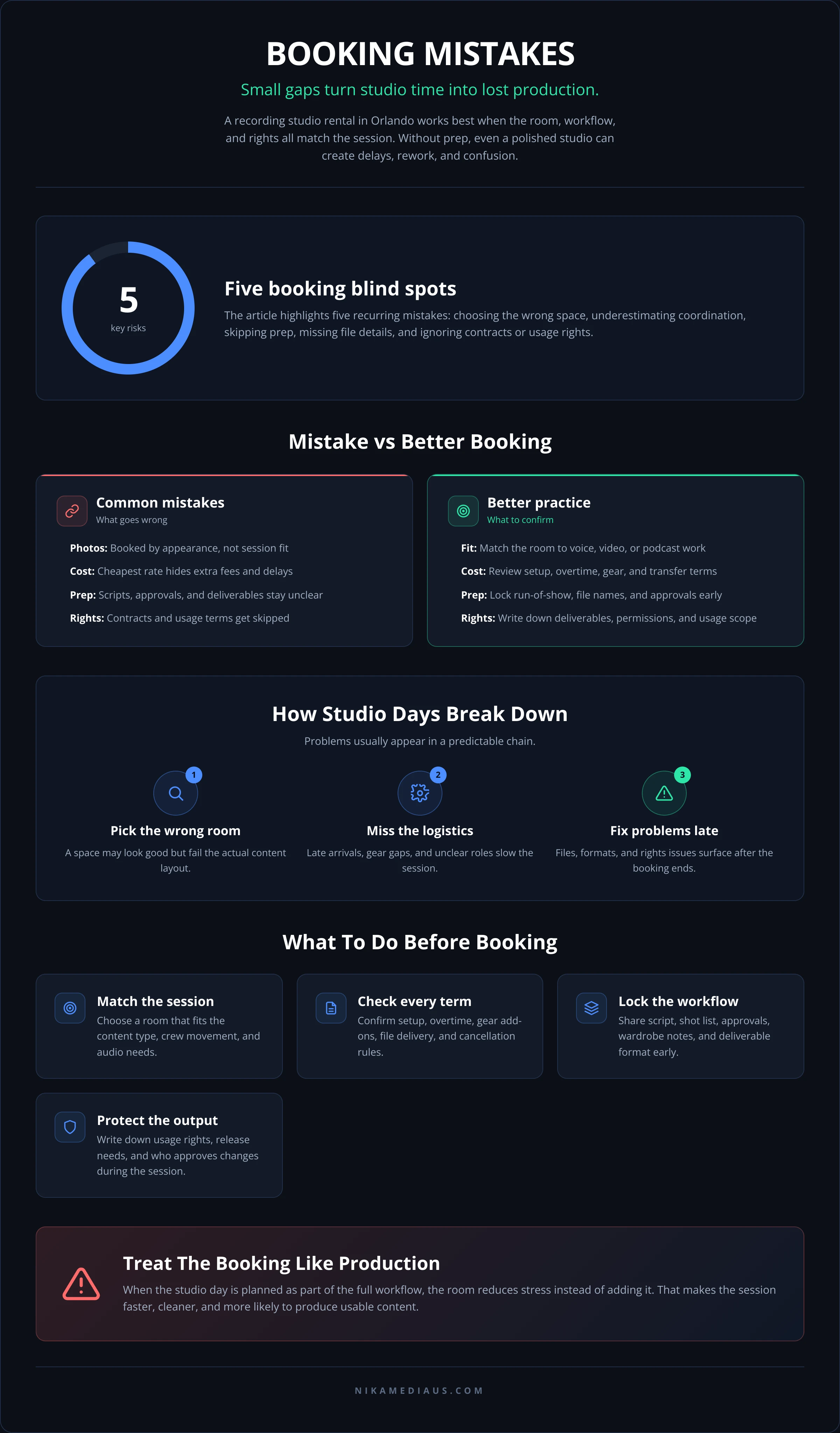
The most common mistake is treating a studio like a generic room with microphones. A recording studio rental in Orlando should fit the job you are doing, whether that is a voice session, a branded video shoot, a podcast, or a full content day with multiple speakers. If you book based on photos alone, you may end up with a space that looks polished but creates friction when the session starts.
The second mistake is underestimating how much coordination the day requires. A studio booking is not just rent; it is a schedule, a technical setup, a talent experience, and often a content pipeline. If your team is juggling scripts, wardrobe, releases, transport, and approvals at the last minute, the room will not save the session.
One useful way to think about it: the studio should reduce decision fatigue, not add to it. If the rental forces you to solve soundproofing, lighting, power, and file transfer while people are already waiting, you are paying for avoidable stress.
Booking the Wrong Space for the Session Type
A common error is choosing a studio because it is available rather than because it fits the content. A solo voiceover session needs different conditions than a product demo, a client interview, or a sales video with multiple takes. Even a well-equipped space can be inefficient if the layout does not support the number of people, cameras, or movement involved.
Before you book, match the room to the work. Ask whether the space supports the full shot list, whether it allows enough room for crew movement, and whether the control area is set up for the way you work. If the session depends on clean audio and repeatable framing, that should influence the room choice as much as the location.
The wrong fit often shows up in small delays: talent waiting off camera, cables crossing walkways, or repeated retakes because the setup has to be rebuilt between segments. A better rental decision removes those interruptions before they become visible on the final edit.
How to Evaluate a Recording Studio Rental in Orlando Before You Book
The better approach starts with a short checklist, not a sales call. Ask what is included, how the room is configured, whether technical support is available, and what happens if the session runs over. You want to know how the studio handles real production conditions, not just what it promises in a listing.
For voice, video, and branded content work, the room should support both sound and speed. That means understanding mic options, monitoring, lighting control, internet access if you need cloud uploads, and whether the space can handle quick changes without turning the day into a reset loop. If your team works from scripts or call sheets, check whether there is a comfortable place for review, note-taking, and client feedback.
If you are comparing studios, think like a producer. Ask for sample room photos taken during actual sessions, not only staged marketing images. Ask whether the studio has a clear process for intake, arrival, and handoff of files. That process often tells you more than the decor.
Hidden Costs and Session Disruptions to Watch For
A rental can look affordable until the extras appear. Common issues include setup fees, overtime rules, gear add-ons, engineer minimums, storage charges, and restrictions on how the space may be used. None of these are inherently bad, but they need to be visible before you commit.
Disruption costs matter too. If the studio requires a long load-in, has limited parking, or does not support fast client turnover, the day becomes less efficient even if the hourly number looks good. A session with a tight schedule does not benefit from a bargain if the team spends half the booking solving logistics.
When you plan around cost, factor in the cost of redoing work. A poor audio take, a missed angle, or a rushed talent performance often costs more than a better room would have. That is why a serious recording studio rental in Orlando should be evaluated as part of the full production cost, not as a line item in isolation.
Prep Mistakes That Ruin a Good Studio Day
Many studio problems start before anyone enters the room. Scripts are unfinished, approval chains are unclear, files are not labeled, and nobody has checked the final deliverable format. By the time the talent arrives, the session is already carrying preventable risk.
A clean prep process should answer four questions: what is being recorded, who approves changes, what equipment or assets are required, and where the final files will go. If those answers are vague, the session may still look productive while quietly producing unusable material.
This is also where you protect the client experience. People remember confusion. If they have to wait while the team decides which version of the script is current or which mic should be used, the studio begins to feel disorganized, even if the room itself is excellent.
Gear, Deliverables, and File Management Errors
One of the most expensive mistakes is assuming the studio will handle every technical detail automatically. You still need to confirm mic preferences, camera formats, frame rates, file naming, backup plans, and delivery method. If the editor expects one format and the studio exports another, the problem may not be discovered until after the session is over.
File handling deserves more attention than it usually gets. Set the naming convention in advance, decide whether raw footage is needed, and confirm how files will be transferred. If the studio provides a cloud handoff or local drive transfer, make sure your team has the permissions and storage ready to receive it.
If you want a useful reference for file and media handling on the web side of production, the Google Search Central documentation is a stable place to understand how published assets and page structure affect discoverability once content goes live. For teams that publish video-led content, technical readiness does not stop at the studio door.
Client, Talent, and Crew Communication During the Booking
A smooth recording studio rental in Orlando depends on everyone understanding the plan. That sounds obvious, but many sessions lose time because the talent expects one thing, the client expects another, and the crew is operating from a different version of the schedule. A studio can only support the work if communication is settled before the first take.
The best sessions use short, practical communication. Share the arrival time, wardrobe notes, file expectations, usage rights, and who has final approval. If a script is still being refined, say so clearly. If the session includes multiple deliverables, define the order so that the team is not improvising under pressure.
This matters even more when the booking is tied to marketing or lead generation. A video or audio piece that is meant to convert later needs a clean start now. If the shoot day feels chaotic, that energy can carry into the final asset.
When Studio Work Breaks Down Like Other Production Systems
Studio sessions fail for the same reason other production systems fail: unclear ownership. You see it in corporate video shoots, in marketing campaigns, and even in automated sales workflows when people assume the technology will cover for a missing process. The pattern is similar to the issues described in Common Corporate Video Production in Orlando Mistakes, where weak planning creates avoidable friction.
The same applies when the studio day supports a larger campaign. If the final asset will be used in ads, landing pages, or sales follow-up, the production team needs to know the intended use. Otherwise, the content may be technically fine but strategically weak.
That is why many teams also review their distribution and follow-up process before booking. A session is easier to justify when it feeds a complete system rather than a one-off upload. For context on common downstream issues, Video Marketing Agency in Orlando Mistakes to Avoid is a useful companion read.
Contracts, Rights, and Usage Terms You Should Not Skip
A studio rental should come with clear terms, and those terms should be read before money changes hands. The biggest oversight is assuming that standard language is enough for every project. It usually is not. You need to know what the rental covers, who is responsible for damage, how cancellations are handled, and whether you can use the output across all the channels you planned.
Usage rights deserve attention because content is rarely made for a single place anymore. A shoot might start as a website video and later become social clips, paid ads, internal training, or a sales asset. If the agreement is narrow, the team may need to revisit permissions later, which slows down publishing.
If a project involves outside talent, music, branded graphics, or third-party assets, keep the rights conversation early and specific. It is easier to define the scope before the session than to renegotiate after approval.
Compliance and Process Habits Worth Adopting
Studio work often touches areas that are not glamorous but still matter: release forms, content permissions, archiving, and platform compliance. For general consumer-facing content, it can be useful to understand how some industries document responsibility and transparency. For example, Megcredit’s responsible credit repair guidance is not about media production, but it is a reminder that clear terms protect both the business and the customer.
If your content includes calls to action, claims, testimonials, or lead capture, those elements should be reviewed with the same care as the visuals. Studios do not solve compliance problems; they only give you the environment to record them efficiently. When the business side is clean, the creative side moves faster.
Choosing a Studio Partner That Supports Growth
The best rental choice is not always the one with the most gear. It is the one that helps your team produce consistently without reinventing the process each time. If you are creating recurring content, sales videos, interviews, or client-facing material, you want a partner who understands how production connects to business outcomes.
That is where a studio becomes part of a system rather than a one-day transaction. A repeatable space can support better content planning, simpler approvals, and faster turnaround. It also makes it easier to keep a consistent visual and audio standard across campaigns.
For Orlando businesses trying to turn content into leads, client trust, or booked calls, the studio should fit into the larger workflow. A well-run rental can support that workflow; a poorly chosen one forces the team to patch problems later.
NIKA MEDIA often works with teams that need the studio day to do more than capture footage. The goal is usually to create assets that convert, support follow-up, and hold up across multiple channels. That only works when the booking is treated as part of the funnel, not just a creative errand.
A Short Booking Checklist You Can Use Today
Before you confirm your next recording studio rental in Orlando, check these points:
- Does the room match the type of content you are recording?
- Are setup, overtime, gear, and file delivery terms clear?
- Has everyone seen the final script, shot list, or run-of-show?
- Do you know who approves changes during the session?
- Are the deliverables, formats, and usage rights written down?
If you can answer those questions without hesitation, your studio day is already in better shape than most. If not, the problem is usually not the room itself; it is the missing process around it.
Frequently Asked Questions
What should I ask before booking a recording studio in Orlando?
Ask what is included, how the room is configured, whether technical support is available, and how overtime or cancellations are handled. You should also confirm file delivery, usage rights, and whether the space fits your exact session type.
Is the cheapest studio always a bad choice?
Not always, but low hourly cost can hide setup limits, gear fees, or time lost to poor logistics. A better comparison looks at the full session cost, not just the sticker price.
How far in advance should I prepare for a studio session?
As early as possible. Scripts, approvals, wardrobe, release forms, and deliverables should be settled before booking day. The more people involved, the earlier the prep should start.
What causes most studio sessions to run behind schedule?
Late arrivals, unclear approvals, untested gear, and changing scripts are common causes. Delays often come from communication problems more than technical ones.
Do I need to worry about usage rights for recorded content?
Yes. If you plan to use the material on multiple platforms or in paid campaigns, the agreement should clearly cover that. It is easier to define the scope before recording than to fix it afterward.
If your next session needs to produce polished content without the usual last-minute friction, book with a team that understands both the room and the workflow. NIKA MEDIA can help you plan the shoot, align the deliverables, and use a professional studio setup in a way that supports your marketing goals from the start.
If you want your next recording studio rental in Orlando to feel organized instead of improvised, reach out before the session date is locked. A brief planning conversation can prevent the most common mistakes, save the team from avoidable delays, and help your content come out ready to publish, promote, and convert.
- recording studio rental in Orlando
- Orlando recording studio rental
- studio rental in Orlando
- recording studio booking Orlando
- professional recording studio Orlando
- Orlando content production studio
- audio and video studio rental Orlando