
Recording Studio Rental in Orlando: FAQs and Advice
August 21, 2026 · 11 min read
Recording studio rental in Orlando: practical FAQs, booking tips, gear checks, and how to avoid costly mistakes before your session.
If you are trying to lock in a recording studio rental in Orlando for a session that has to go right, the hard part is rarely finding a room. The real challenge is choosing the right setup before the clock starts running and the first take is already costing you time.
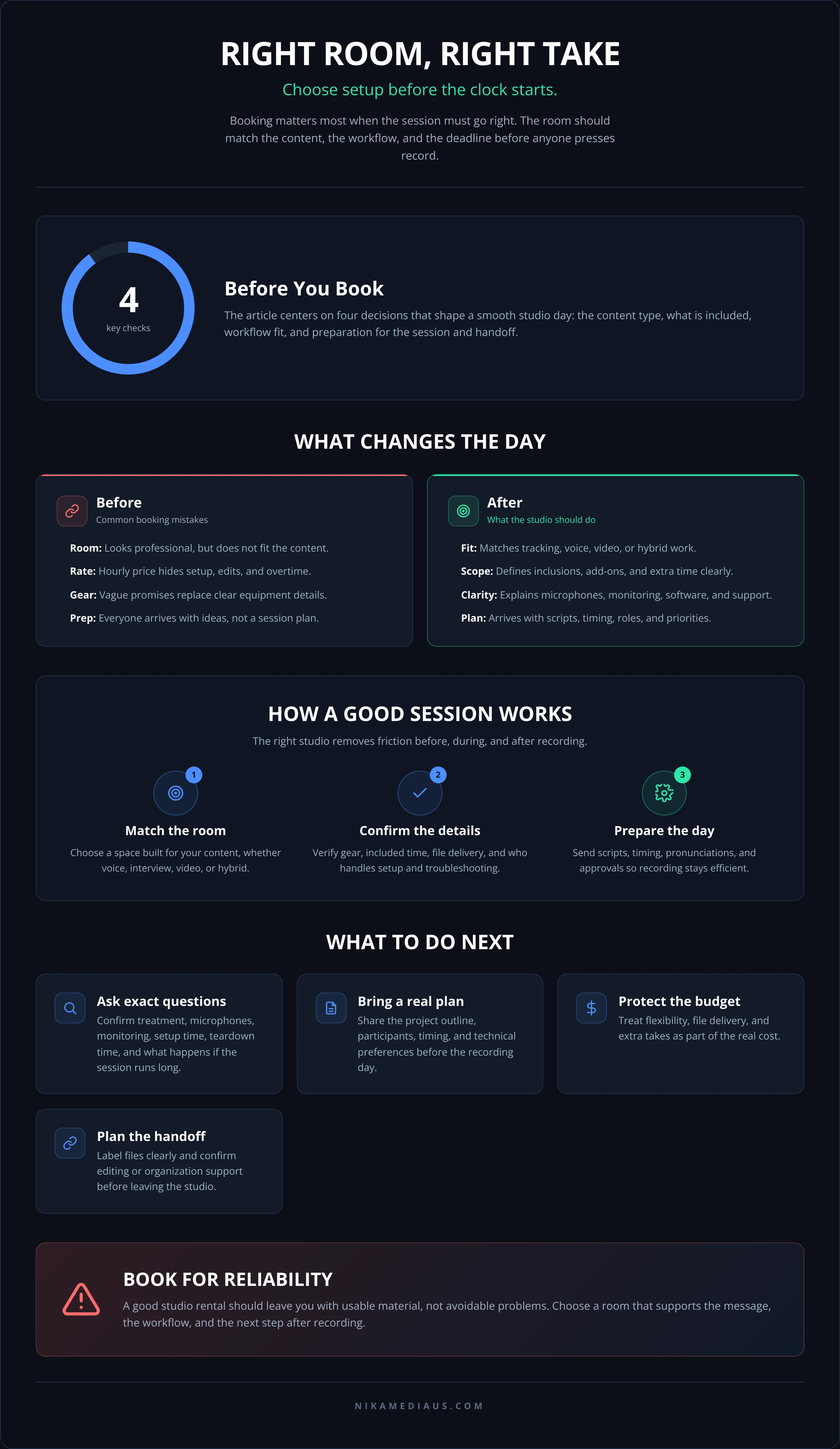
A small mismatch can throw off the whole day: the room is beautiful but not treated for spoken-word work, the engineer is booked but not briefed, the gear list looks solid but does not include what your team actually needs, or the schedule is too tight for pickups. If your project has a deadline, the details matter more than the brochure.
- Know whether you need tracking, voice recording, a video-friendly setup, or a hybrid session.
- Ask what is included before you compare hourly rates.
- Confirm room size, acoustics, and monitoring options for your specific content.
- Bring a session plan, not just a file folder of ideas.
- Leave room for retakes, exports, and the one technical issue nobody planned for.
What a recording studio rental in Orlando should solve before you arrive
A good room is not just a place with microphones. It should reduce friction before, during, and after the session. If you are booking a recording studio rental in Orlando for a brand video, podcast episode, ad read, training module, or social content batch, the space should support the way you actually work.
That means more than checking whether the studio looks professional. You want to know whether the space is set up for the kind of audio you need, whether your talent can perform comfortably, and whether the team can move from setup to recording without losing momentum. For many projects, that is the difference between a clean session and a day spent fixing avoidable issues.
If your recording is tied to a campaign launch, you are not just buying access to a room. You are buying reliability, discretion, and enough technical structure to keep the project moving. The studio should make it easier to capture usable material the first time.
Match the room to the content, not the other way around
A voice-over booth, an interview setup, and a content studio for camera-facing brand work are not interchangeable. Each one changes how people speak, how the engineer monitors, and how much space you need for lighting, framing, or on-camera movement. If the project involves both video and audio, the room has to support both without turning the session into a compromise.
This is where a clear brief helps. If the content will later be cut into short-form ads, social clips, or website assets, the studio should support clean capture and quick turnaround. If you are recording executive messaging or customer-facing explainers, the setting also needs to feel credible on camera, not just technically quiet.
Questions to ask before you book a session
The fastest way to protect your budget is to ask precise questions before you commit. A polished listing can hide basic problems if you do not verify the details that affect your recording day.
Start with the room itself: what type of sound treatment is in place, which microphones and interfaces are available, and whether the studio includes monitoring, isolation, or a control area. Then move to the operational side: who handles setup, how much time is included for arrival and teardown, and what happens if your session runs long.
If the project involves a brand asset that will be used publicly, the rules matter too. Ask about file delivery, storage, and whether you will leave with the formats you need. If usage rights or release forms are part of the process, get that clear before the talent walks in.
For projects where audio supports consumer-facing content or outreach, it is also worth checking whether the studio can coordinate with your broader production workflow. A studio rental that looks affordable at first can become expensive if it adds extra editing rounds or delays your campaign schedule.
Equipment questions that save the most trouble
Do not settle for “we have professional gear.” Ask for the actual microphone types, what headphones are provided, whether you can bring your own laptop or interface, and whether the room supports the recording software your team uses. If you are not technically minded, ask for a simple summary in plain English.
A practical test: if the studio cannot explain what they provide in one short answer, they may not be organized enough for a fast-moving session. For a production day with multiple stakeholders, clarity matters more than claims.
Signs the room will support your workflow
The best rooms make the process feel calmer, not more complicated. You should be able to arrive, settle the talent, verify the setup, and start recording without guessing who is responsible for each step. A studio that handles this well usually has a clean check-in process, a simple signal flow, and a team that understands how to keep the session moving.
If you are bringing clients, executives, or on-camera talent, comfort matters more than many people expect. People perform better when they know where to sit, where to look, and what the engineer needs from them. A studio that anticipates those small human details can make the difference between a tense session and a productive one.
Look for signs that the room is built for actual use, not just appearance. Cables should be managed, the control path should be obvious, and there should be a plan for interruptions, resets, and file transfers. If the staff treats those details casually, the session will likely feel casual too.
When reviewing options for recording studio rental in Orlando, read the room as a workspace. The question is not whether it looks impressive in photos. The question is whether it supports the kind of concentration your recording needs.
A quick red-flag checklist
Be cautious if the studio avoids direct answers about what is included, cannot tell you how long setup usually takes, or does not ask anything about your script, format, or recording goals. A one-size-fits-all pitch is often a sign the studio has not thought through your use case.
You should also pay attention to silence between promises. If a provider says the process will be easy but cannot explain who manages file delivery, who troubleshoots technical issues, or how extra time is billed, expect friction later.
Budget, timing, and what “included” should mean
Hourly pricing is only one part of the real cost. In a recording studio rental in Orlando, the cheaper option is not always cheaper once you account for setup time, additional edits, engineer support, or the cost of returning for missing takes. A good booking decision starts with the full session scope, not the headline rate.
Ask what is included in the base rental, what counts as an add-on, and what happens if your team needs more time because the script changes or the talent wants another pass. For content teams, flexibility can matter more than a small price difference. For legal or compliance-related recordings, precision and documentation may matter even more.
If the recording supports a lead-generation funnel, a course, or an offer page, delays can cost more than studio time. When the session slips, editing, approvals, and publishing also slip. That is why a realistic schedule is part of the value of the room itself.
There is also a separate issue many teams overlook: compliance and rights. If your recording uses music, images, or voice talent in a way that will be distributed publicly, make sure your team handles permissions correctly. When a project has legal risk, the safest approach is to involve the right advisors early, especially if the content has claims, endorsements, or customer-facing promises. For general guidance on consumer-law concerns, FTC guidance on advertising and marketing is a useful starting point, and for copyright basics, the U.S. Copyright Office is the official source.
If a studio does not ask about usage, deliverables, or release needs, that is not a good sign. You want a provider that understands the difference between “we recorded it” and “you can actually use it everywhere you planned.”
What a solid booking conversation sounds like
A useful studio conversation usually sounds practical. They ask what you are recording, how many people are involved, whether you need video, and what file format you expect afterward. They also tell you what will make the session smoother, such as arriving early, sending scripts in advance, or labeling tracks clearly.
That kind of conversation helps you spot whether the provider is built for real production work or just renting a pretty space.
How to prepare so the session stays efficient
A smooth recording day starts before anyone sits in front of the microphone. Send the studio the project outline, names of participants, rough timing, and any technical preferences in advance. If your team is recording multiple segments, build a simple order for the day so nobody is deciding what comes next while the clock is running.
Talent prep is just as important. Give speakers enough context to understand the audience, the tone, and the goal of the recording. If they are reading from a script, let them rehearse aloud before the session. If they are improvising, provide a short list of anchor points so the recording stays focused.
This is where many teams benefit from thinking beyond the room. A recording day often sits inside a larger content system: one session may feed ads, social cutdowns, website assets, or sales follow-up. If your team is also planning a broader video strategy, the article on choosing a video marketing agency in Orlando can help frame the production side, while corporate video production in Orlando FAQs is useful if the recording needs to align with a corporate video workflow.
Small preparation habits that protect the day
Bring clean copies of scripts, confirm pronunciations, and send reference audio if the style matters. If the project includes multiple stakeholders, designate one person to approve changes on the spot. That avoids the common problem of five opinions slowing one session.
It also helps to think about what happens after recording. If the project will be cut into multiple assets, tag files clearly while the context is fresh. A tidy handoff saves time in post-production.
When a recording studio rental becomes part of your sales system
For many businesses, the recording session is not an isolated production task. It is part of a broader system that turns attention into leads, leads into conversations, and conversations into revenue. In that context, the studio should help you produce assets that support the next step, whether that is a landing page video, a follow-up message, or a thought-leadership clip.
That is why some teams pair recording with automation and response workflows. If the content is meant to bring in inquiries, the response process matters almost as much as the recording itself. A polished video can underperform if the follow-up is slow or inconsistent. If that is your situation, the article on AI sales call automation for better lead response may be worth reading after you finish planning the session.
For businesses that want a production partner, not just a room, this is where NIKA MEDIA tends to fit the brief: capture the content well, then make sure it can do business work afterward. A studio day should leave you with material that is ready for the next phase, not a pile of files and more decisions.
What to look for if the content must convert
If the recording will support sales, pay attention to the message structure. Can the session produce a clear opening hook, a credible proof point, and a direct call to action? Can it be adapted into shorter versions without losing meaning? If not, the project may need a sharper production plan before booking time.
The best sessions usually treat the recording as an asset pipeline, not a one-off event.
FAQ: recording studio rental in Orlando
How far in advance should I book?
Book as soon as you know the content type, participants, and ideal date. If the session needs video, multiple speakers, or coordination with other vendors, earlier booking gives you a better chance of getting the room and time block that fit the project.
What should I bring to the studio?
Bring your scripts, reference materials, any approved branding assets, and any gear the studio asks you to confirm in advance. If your recording depends on a particular format or file delivery method, make sure that is written down before the session begins.
Is a studio rental enough for a polished result?
Only if the room, the technical setup, and the session plan all match the job. A strong environment helps, but the result also depends on preparation, performance, and what happens after recording. If the content is part of a larger campaign, you may need production support beyond the rental itself.
Can one studio handle both audio and video?
Sometimes, yes, but not every studio is built for that workflow. Ask about lighting, camera space, framing, and whether the audio setup will still be comfortable once video equipment is added. The answer should be specific to your project, not a generic yes.
What if I need help after the recording day?
Ask in advance whether the studio supports editing, file organization, or handoff guidance. The cleanest sessions are the ones where post-production was considered before anyone pressed record.
If you are planning a session and want it handled with the same care your message deserves, talk to NIKA MEDIA about a recording setup that supports both production quality and business goals. A quick planning conversation can save you from the usual last-minute fixes and help you book the right room for the actual job.
If your project needs more than a space, ask about a workflow that includes recording, content strategy, and follow-up systems. That is often where a simple recording studio rental in Orlando becomes a practical part of a bigger growth engine.
- recording studio rental in Orlando
- recording studio rental Orlando
- Orlando recording studio rental
- studio rental in Orlando
- recording studio Orlando