
Choosing a video marketing agency in Orlando
August 8, 2026 · 11 min read
Choose a video marketing agency in Orlando with confidence. Learn what to assess, what to avoid, and how to find a team that supports lead flow.
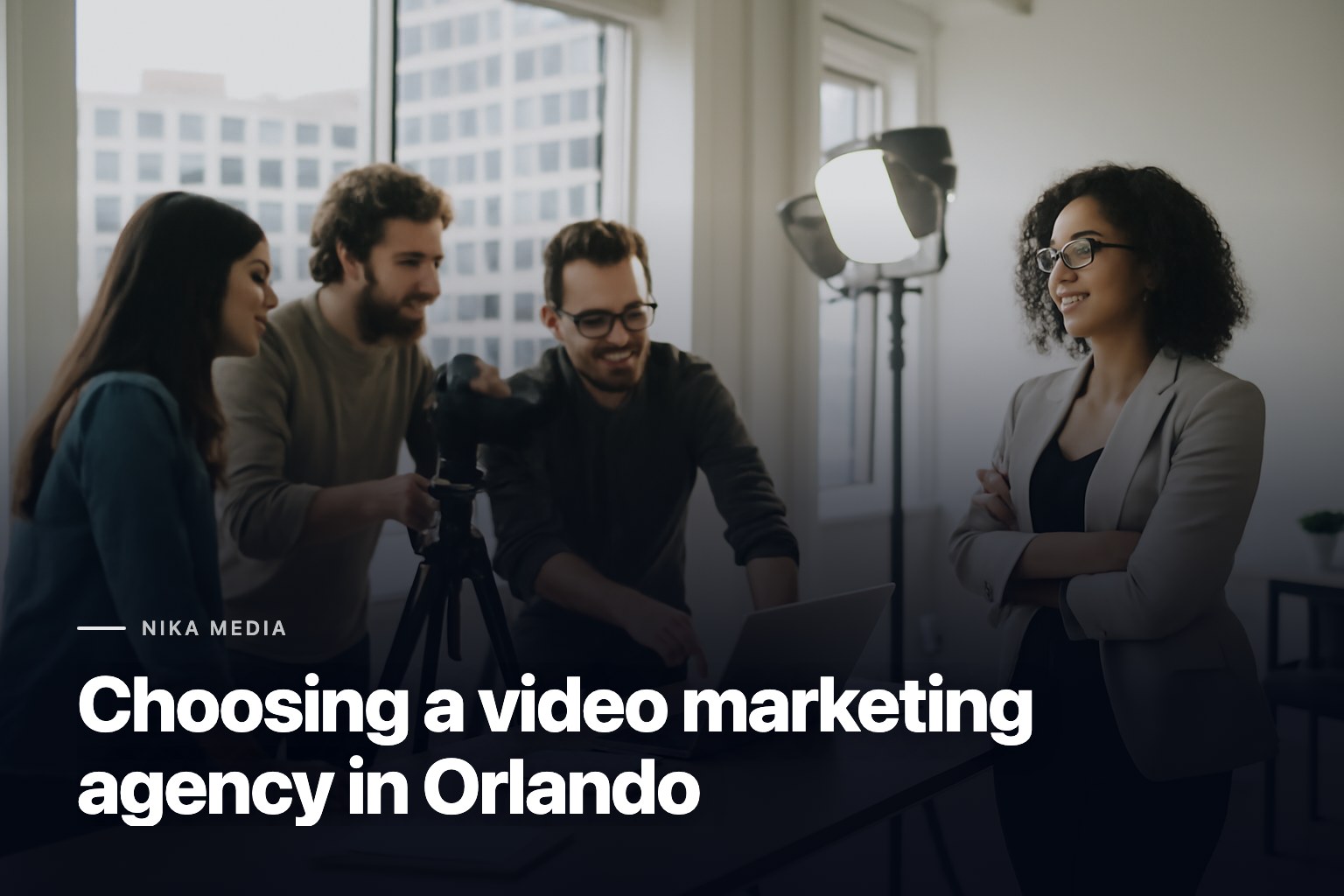
If you are about to hire a video marketing agency in Orlando, the decision usually lands at a bad time: the website is already live, leads are uneven, and someone on your team is asking why the content looks good but does not seem to move buyers. That is where the real question starts.
A polished reel is easy to admire. A video system that helps a business attract leads, answer questions after hours, and support sales is harder to build. The difference matters, especially if you are comparing studios, editors, ad buyers, and agencies that all promise the same thing in different words.
What a strong video marketing agency in Orlando actually does
A real video partner helps you make decisions, not just files. That starts with the message, the audience, and the action you want viewers to take after they watch. If those pieces are missing, even high-end production can feel expensive and underused.
A capable video marketing agency in Orlando should be able to connect creative work with business goals. That might mean a brand video for a sales page, short-form content for social reach, or a library of clips that sales teams can reuse when prospects ask the same questions over and over.
The best teams also know when video should do more than sit on a website. A founder-led brand may need content that helps a viewer trust the person behind the business. A service company may need proof-driven clips that reduce hesitation. A local brand may need short, direct pieces that answer common objections before a sales call ever happens.
That is why it helps to ask whether the agency thinks in terms of assets or outcomes. Assets are the deliverables. Outcomes are the decisions those deliverables are supposed to influence.
Questions to ask before choosing a team
The first call should tell you more than the portfolio does. If the conversation stays at the level of “we make cinematic content,” keep going until you hear how they would shape a message around your actual offer.
A good video marketing agency in Orlando should answer questions such as:
- Who is this content for, and what problem is it meant to solve?
- What happens after someone watches the video?
- How do you decide which formats fit the funnel or channel?
- Do you help with scripts, hooks, offers, and calls to action?
- How do you measure whether the content is doing useful work?
Their answers should sound practical, not rehearsed. You are listening for the ability to connect storytelling with sales behavior. If they only talk about cameras, lighting, and aesthetics, they may be better suited to production support than strategic marketing.
It also helps to ask how revisions are handled. Some teams are strong on creative direction but weak on process. Others deliver quickly but never slow down long enough to question whether the message itself is strong. Neither extreme is ideal when the content has to perform in the real world.
When you review their work, do not stop at whether it looks clean. Ask what the video was meant to achieve, where it was used, and what the surrounding campaign looked like. A polished clip without context can hide weak strategy.
Signals that the team understands business use, not just production
One useful test is whether they can explain the role of each deliverable. For example, a testimonial-style video may support trust, while a short direct-response ad may support lead generation, and a founder video may help with brand positioning. If the team treats all three as interchangeable, they may not be thinking deeply enough about marketing.
Another signal is how they react when you mention your actual sales process. If they ask about common objections, customer questions, and where leads usually fall off, they are likely thinking beyond the shoot day. That is a good sign.
Choosing between studio work, on-location production, and hybrid workflows
The setting shapes the message. A studio gives control, speed, and consistency. On-location work gives context and social proof. Hybrid workflows can make sense when a brand needs both a polished core library and more natural, behind-the-scenes content.
If your business depends on looking credible and organized, a controlled environment often reduces friction. That is one reason many teams look for Recording Studio Rental in Orlando: What a Professional Studio Really Includes when they need repeatable quality for interviews, founder content, or customer-facing media.
A studio is not just a room with lights. It is also about acoustic treatment, workflow, privacy, and whether the space helps people speak clearly and naturally. If the talent feels rushed, distracted, or cramped, it shows in the footage.
On-location production can be useful when the environment itself supports the message. A restaurant, office, showroom, clinic, or workshop floor can add credibility if the space looks intentional. The downside is that location shoots are more exposed to noise, timing issues, and visual clutter. If a location is busy or unpredictable, the shoot can become more about problem-solving than communication.
Hybrid production is often the most flexible model for service brands and founders. You can record the core message in a controlled setting, then capture supporting footage elsewhere. That gives you a base of reliable assets without losing the human context that makes content feel real.

What to expect from strategy, scripting, and editing
Many businesses hire for filming and discover too late that the script was the real weak point. A good concept can survive modest production. A weak message rarely survives expensive production.
Before the camera turns on, someone should be thinking through the hook, the audience tension, the proof, and the next step. The script does not have to sound robotic, but it should make decisions easier for the viewer. If the content is for sales, it should address hesitation. If it is for awareness, it should create relevance quickly. If it is for nurturing, it should build trust without wandering.
Editing matters for more than pacing. It shapes clarity. A strong editor knows what to remove, where to compress, and how to keep attention without making the piece feel frantic. The best edits usually protect the message instead of showing off transitions.
If your agency also handles campaign setup, ask how they adapt the same source footage for different placements. One video can become several assets, but only if the team plans for that from the beginning. A long-form interview, for example, might support a website page, short clips for social, and snippets for remarketing when cut with intent.
A good partner will also talk honestly about what video cannot do alone. If a landing page is confusing or the follow-up is slow, the content will not fix that by itself. It can help, but only if the surrounding system is ready to receive the attention it creates.
How AI-assisted follow-up changes the value of video
Video becomes much more useful when it is connected to a response system. A prospect who watches a clip, asks a question, and then waits too long can lose momentum fast. That is where AI-assisted response tools can matter, especially for businesses that get inquiries after hours or across multiple channels.
If your brand uses WhatsApp, calls, or fast lead response, it is worth understanding AI Virtual Assistant for WhatsApp: A Complete Guide to Making the Right Decision. It explains how automated replies can support a sales process without making it feel cold or generic.
For many service businesses, video works best when it is paired with a follow-up flow. The content introduces the offer. The automated assistant responds to interest. The sales process keeps moving while the team is busy or offline. That combination can make the difference between a form fill that goes nowhere and a conversation that gets booked.
This is also where a video marketing agency in Orlando should be thinking in systems. If they only deliver content, you still need to figure out what happens next. If they understand how video, automation, and lead handling work together, the content can support the full buyer journey.
Not every business needs advanced automation on day one. But if leads are coming in at odd hours, if the team misses calls, or if the same questions keep repeating, the case for connected systems becomes obvious. Video attracts attention; response systems protect it.
Where AI fits without making the brand feel robotic
The goal is not to replace human conversation. It is to remove delay and reduce friction. A well-designed assistant can confirm interest, answer common questions, and route people to the next step. It should feel like a useful front desk, not a gimmick.
That matters for founder brands, service businesses, and anyone selling something that requires trust. The more personal the sale, the more important the tone becomes.
Common mistakes that waste time and budget
The most expensive mistake is hiring for appearance alone. A glossy demo reel can hide weak discovery, thin messaging, or a production process that ignores the actual buyer. If the team cannot explain why a piece of content should exist, you may end up with something attractive and underperforming.
Another common problem is trying to make one video do everything. A homepage explainer, a sales clip, a social teaser, and a nurture piece may all come from the same shoot, but they should not all use the same structure. When content is forced into a single shape, it often becomes too vague for direct response and too salesy for awareness.
A third mistake is ignoring consistency. One strong shoot helps, but a content system usually does more for a business than a one-time asset. That does not mean constant volume for its own sake. It means planning what you need, how long it should live, and where it should be used before you invest in production.
A fourth mistake is forgetting about the customer experience after the video works. If someone responds to a campaign and gets a slow, awkward follow-up, the content did its job and the handoff failed. This is one reason NIKA MEDIA often approaches content, automation, and response as connected pieces rather than isolated services.
One more thing to watch: over-editing the message until it sounds like everyone else. If the script reads like a generic marketing template, the audience will feel it. Specificity is usually more persuasive than polish.
Making the final decision with less guesswork
When two agencies look similar, compare how they think rather than how they present themselves. Which one asked better questions? Which one understood your offer faster? Which one talked about what happens after the shoot, not just during it?
A video marketing agency in Orlando should leave you with a clearer plan, not a bigger cloud of ideas. If the next steps are obvious, the team is probably seeing your business well. If every answer stays vague, the process will probably be vague too.
Use this quick filter before you commit:
- Do they understand your audience’s objections?
- Can they explain how the content fits into your sales flow?
- Are they comfortable adapting one shoot into multiple uses?
- Do they bring structure to scripting and follow-up?
- Can they describe what success looks like without guessing?
The right choice is rarely the flashiest one. It is the one that helps you make better decisions after the first call, during the shoot, and long after the file is delivered.
FAQs
How do I know if a video marketing agency is strategic or just production-focused?
Ask them how they decide what to film, who the content is for, and what it should lead to. If they focus only on visuals and equipment, they may be production-first. If they talk about messaging, audience, distribution, and follow-up, they are thinking strategically.
Should I choose studio production or on-location filming?
It depends on the message. Studio production works well when you need control, consistency, and a clean presentation. On-location filming is better when the space itself adds credibility or context. Many brands use a mix of both.
What should I bring to the first meeting with a video agency?
Bring a clear description of your offer, your audience, the questions people ask before buying, and where you lose leads today. If you have examples of past content that worked or failed, those help too.
Can video help if my business needs leads, not just views?
Yes, if it is built for the right job. Video can support lead generation when it speaks to real objections, drives viewers to a next step, and is paired with a sensible follow-up process.
How does AI fit into a video marketing strategy?
AI can help respond faster to leads, answer common questions, and keep the conversation moving when your team is unavailable. It works best when it supports the sales process instead of trying to replace it.
If you want a team that can connect strategy, production, and response without making the process harder than it needs to be, NIKA MEDIA can help you map the next move around your actual sales goals. Start with the content gap, the lead-handling problem, or the studio setup that is slowing you down, and build from there.
If your current videos look good but do not generate enough action, talk to NIKA MEDIA about a production plan that also supports lead flow, WhatsApp follow-up, and sales-ready content. A focused conversation can save you from another round of pretty assets that never earn their place.
- video marketing agency in Orlando
- Orlando video marketing
- video production Orlando
- video marketing strategy
- AI-assisted lead follow-up